The Mutual Agreement between Bees and Humans
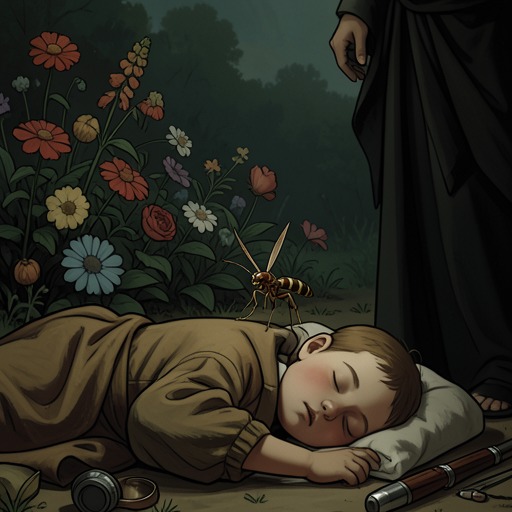
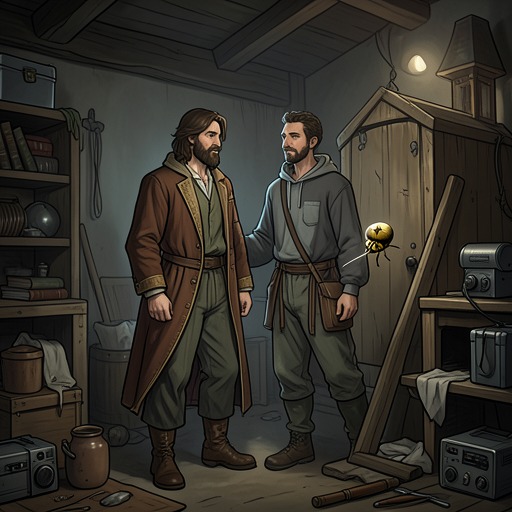
The Adventures of Maya the BeeThe Mutual Agreement between Bees and Humans is a reciprocal social compact in which Bees share honey and place themselves under human protection, while humans provide for their winter needs, shelter them from cold, and guard them against animal enemies. Presented through Cassandra’s teaching to Maya, it gives practical terms to the friendship between the two species and contrasts human care with the dangers of life without protection.
Terms of the Agreement
Cassandra describes the exchange as both material and protective. Bees share their honey; humans leave enough for the winter, provide shelter against the cold, and defend them from predators attracted to their stores. The arrangement is thus not a claim that humans take all the honey, but a balance in which the Bees retain what they need to survive the season.
The relationship also carries an ethical expectation: Cassandra portrays humans as powerful without abusing their power, and says they bring order and prosperity wherever they go. In her account, the Bees’ willingness to serve is voluntary, grounded in their knowledge that humans are friendly to them. The agreement joins an exchange of resources to a continuing bond of trust.
Protection and the Cost of Its Absence
Cassandra presents human protection as a practical answer to the vulnerability of an unprotected colony. She warns that a tribe of Bees returning to the wild and trying to live without humans soon perishes. Many animals seek honey, and an entire bee-city—with its buildings and inhabitants—may be destroyed when an animal pursues that resource. The compact therefore promises more than comfort: it helps preserve the colony and its stores against threats that Bees may not be able to withstand alone.
This account is Cassandra’s counsel to Maya, not an independently tested description of every human encounter. Maya wants to hold on to Cassandra’s favorable view even after hearing Puck’s disparaging claims about human beings; her uncertainty makes the agreement part of a larger question about whom she can trust. Its terms offer a reason for confidence, while the narrative leaves room for her to assess that inherited belief through experience.
Scope and the Bees’ Own Defense
Human protection does not mean that Bees surrender responsibility for their own safety. When Hornets approach, the Bees mobilize their soldiers, reinforce the entrance with wax, and fight the invaders themselves. The compact describes a relationship with humans, not a promise that humans will replace the colony’s own organization or action in every danger.
The distinction gives the arrangement a clear scope: humans supply shelter, winter reserves, and protection from animal enemies, while the Bees remain a collective capable of organizing its own defense. Their mutual agreement is therefore neither complete dependence nor mere exchange of honey. It is a form of interspecies cooperation that supports survival while leaving the Bees’ own communal agency intact.